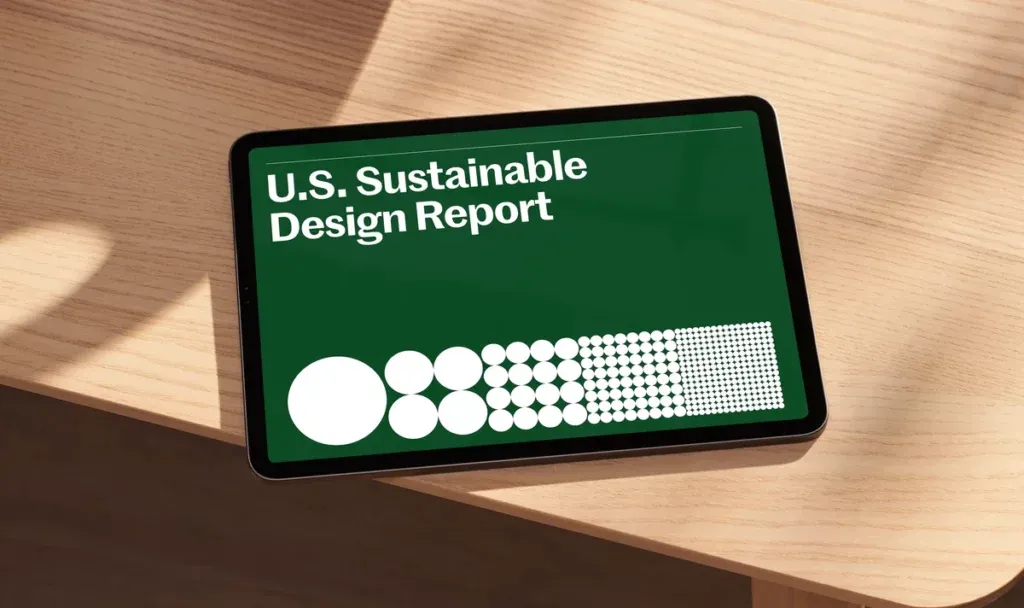
Metropolis and Interface released the 2026 U.S. Sustainable Design Report in February. Learn about the inaugural report at this link, where you can also register for a free download of the report, which offers deep dive on where things stand in American sustainable design.
DBA's Katie Ackerly is quoted in the "At a Threshold" section, in which editors Verda Alexander and Francisco Brown survey sustainability leaders on what must change and what comes next. Here are Ackerly's takes.
On the current state of sustainability:
“We’re in transition in a couple different ways. There’s a generational evolution, with an old guard making way for a new generation of practitioners that came up in a different paradigm of thinking about climate change and sustainability. A lot of young people are coming in with the mindset impressed upon them from a young age that we’re in big trouble, that buildings are a big part of it, and that we have a role to play in solving the problem.
We had milestones—2020, 2025, 2030—that felt far out, and now they’re here, and we’ve fallen short. We have to go into a spiritual place and figure out what we’re working for.”
On the biggest roadblocks to deeper integration today:
“Green building standards don’t do a great job helping practitioners differentiate strategies that make meaningful sense to the client or mission of the building versus those aimed at global impact. When health benefits to residents and lower utility bills are conflated with greenhouse gas emissions drawdown at a global scale, and
that burden is put on a low-income housing developer, it raises questions of equity and how we distribute the costs of being on the leading edge.
It has felt a little all or nothing, and I find myself creating new guidelines so we can make an impact without making clients feel responsible for climate change.”
On one tangible change she'd love to see happen in our industry right now:
“A tangible change I’d love is highlighting how much architects can be more informed and lead on enhancing ecosystem services on the sites they’re working on. At small and large scales, if you’re aware of how a project can have a meaningful regenerative benefit to the site, you’re doing a lot.
Ecologies often aren’t part of the conversation because they’re seen as civil landscape, not the architect’s purview, but the extent to which architects can lead the whole team and set goals is a big area where it’s really low cost and really big benefits.