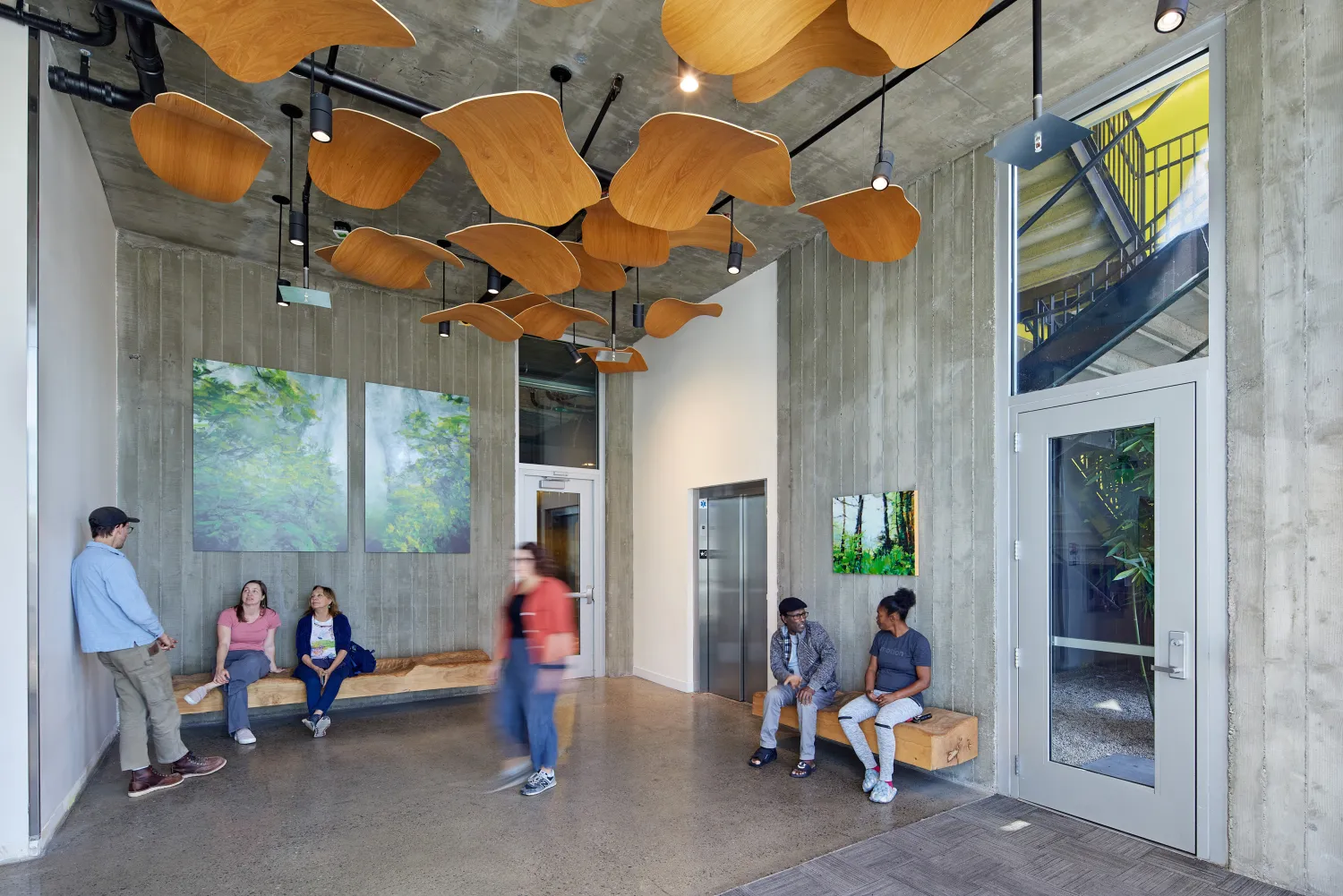
The role of the architect in affordable housing design typically ends at completion. Construction finishes, residents move in, and designers move on to other projects. But what happens next? How do those funding, designing, building, and operating affordable housing know if their buildings work for residents?
Post-Occupancy Evaluation (POE) offers a way to move beyond design intent and assess real-world performance, including through resident engagement. But formal POEs remain rare, inconsistent, and difficult to fund within the US housing system. This webinar brings together a panel of architects and nonprofit developers who have completed or are in the midst of POEs of affordable housing projects. In a series of short presentations and a conversation to follow, speakers will examine how resident-centered POEs are conducted today and how they might be embedded more systematically in the delivery and management of affordable housing.
FREE virtual event: May 15, 1230-200pm ET, register here: https://harvard.zoom.us/webinar/register/WN_Gp6202lsTAaRo0h6F99dVg#/registration
A transcript of this discussion will be edited for inclusion in The State of Housing Design 2027, a book to be published by the Joint Center for Housing Studies in early 2027.
panelists:
Katie Ackerly, David Baker Architects (California)
Regina Chen, MASS Design Group (Massachusetts)
Jessica Goswick, Architects FORA (California)
Cory Hawbecker, Holst (Oregon)
Jake Rosen, Resources for Community Development (California)
moderator:
Aaron Smithson, Harvard Joint Center for Housing Studies (New York)
Related: Learn more about POE tools at this DBA How-To, which includes a downloadable Shared Evaluation Walk explainer and templates.