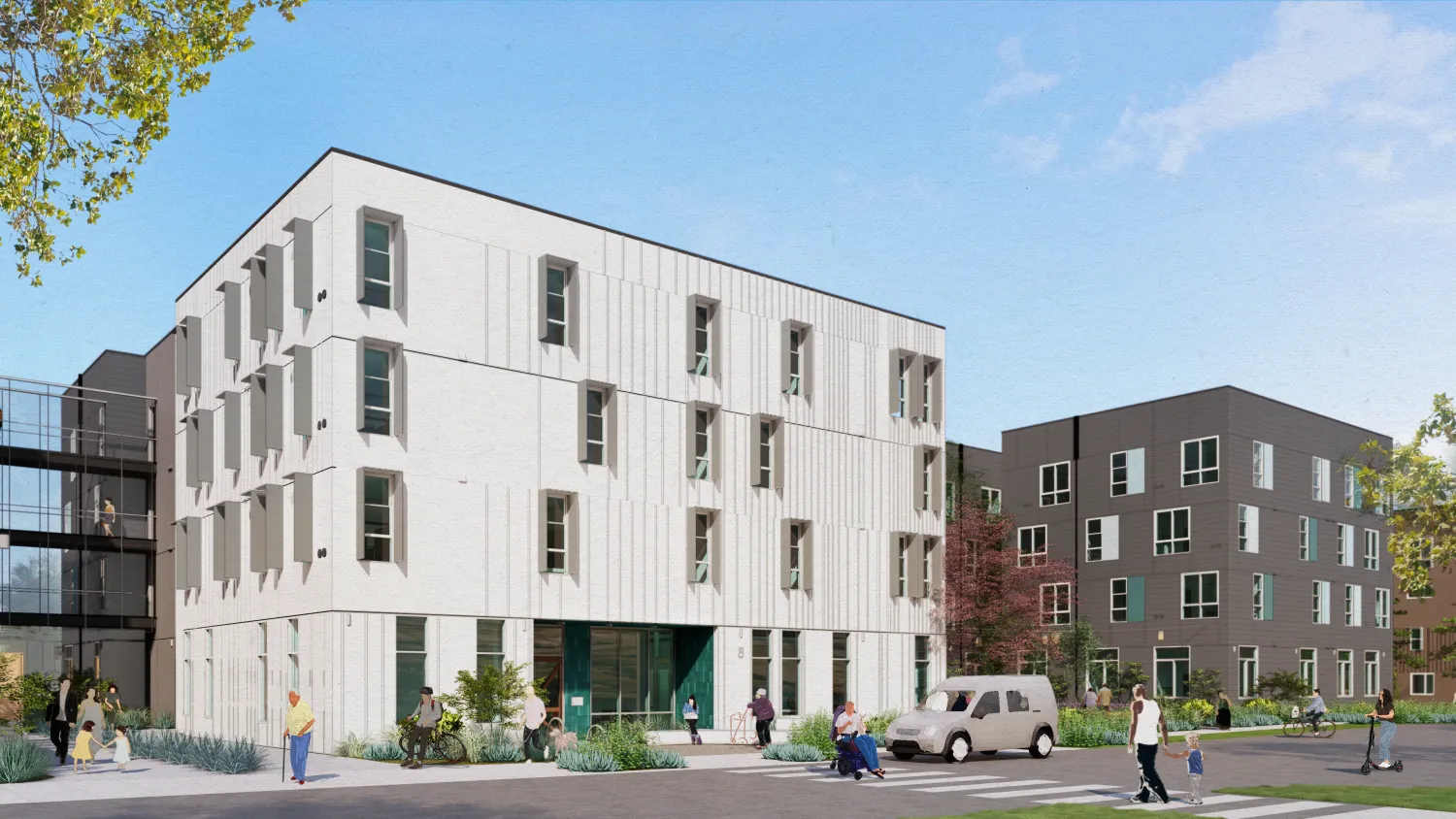
The design for 8 Partridge includes an elevated crosswalk, accessible drop-off and loading zone, and a welcoming entrance with visual connection to the lobby waiting area.
How resident-centered design shaped a more inclusive and responsive housing project—without adding significant cost.
Inclusive design is an approach to the built environment that prioritizes usability, comfort, and belonging for people with a wide range of needs and abilities. It is rooted in the belief that spaces should work for everyone—people of all ages, backgrounds, and abilities—not just those whose needs fit a narrow standard.
Framed as a design approach rather than as a checklist of design features, inclusive design inherently benefits the broader community, as well as those with disabilities. At its best, it helps create homes and communities where more people can thrive, regardless of age, ability, or circumstance. While the benefits are widely understood, some stakeholders in affordable housing—an industry already challenged by limited funding and competing requirements—are understandably hesitant to commit to efforts they fear may add cost or complexity to projects.
One of our recent affordable housing projects—8 Partridge at Midway Village in Daly City, led by MidPen Housing—offered a unique opportunity: Could we apply inclusive design strategies to a deeply budget-constrained project, and not just preserve its values, but actually use them to guide our most difficult decisions?
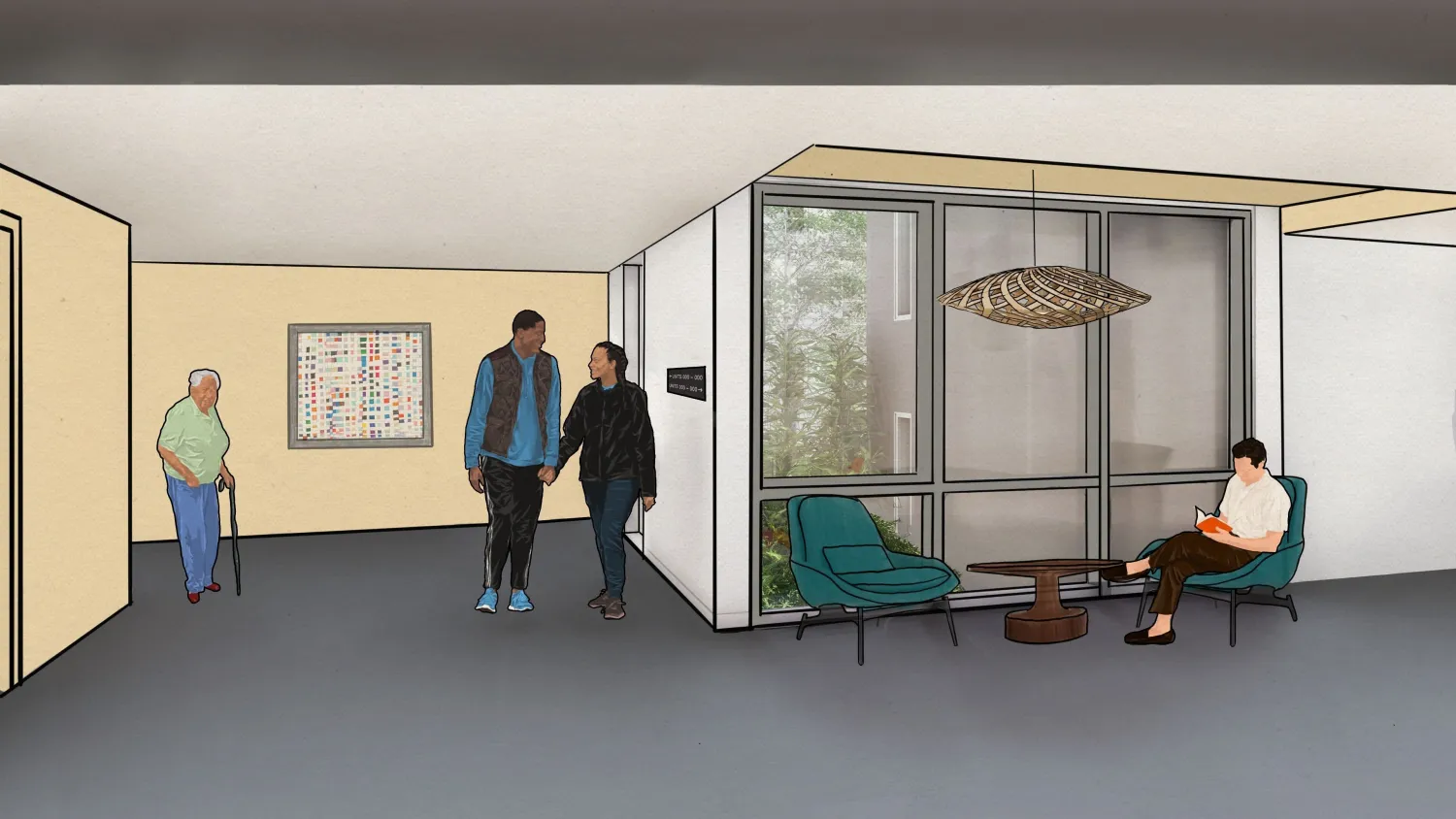

Midway Village is a multi-phase master plan, replacing an aging public housing facility with new affordable housing. 8 Partridge, the second building to be completed as part of the master plan, serves a mix of seniors and families, many of whom have been living in the older apartments being replaced, as well as some formerly homeless individuals. 8 Partridge also includes homes reserved for participants in the Housing for a Healthy California (HHC) program, referred through San Mateo County Health Services. These potential residents are living with chronic illness, disabilities, and histories of trauma and homelessness. This phase also includes a neighborhood-serving preschool. That mix of users and uses raised complex and important questions: How do we support mobility, independence, comfort, and wellness across such a wide range of needs and abilities? And how do we do it in a way that’s scalable, feasible, and true to our design values?
At DBA, we see inclusive design as a powerful tool for making buildings more equitable, responsive, and enduring. This approach to the project helped us determine which decisions would provide the most meaningful, lasting benefit and ultimately demonstrated that inclusive design not only improves projects, but that it can serve as an effective strategic guide when resources are limited.
A Committed Team
DBA is proud to be a Committed Firm with The Kelsey, whose Inclusive Design Standards helped shape our approach. 8 Partridge is the first project outside of The Kelsey’s own development portfolio to pursue inclusive design certification using the Standards, and has recently achieved Gold certification. Throughout the design process, The Kelsey staff were a valuable resource to help the team understand the intent behind the Standards and discuss project specific opportunities and constraints.
This milestone achievement wouldn’t have been possible without developer MidPen Housing’s vision and willingness to engage deeply with this process, even though the budget was tight. Together, we explored not just what additional inclusive features we could afford, but how we could let resident needs help define what was prioritized in the project.

Listen First
One of our most valuable tools was a resident-centered focus group workshop, hosted in partnership with San Mateo County Health Services. A group of participants in the HHC program, as well as care managers who staff the program, generously contributed their time and feedback.
The workshop participants shared insights that were both practical and specific, including:
- the importance of well-lit kitchens for safety and comfort;
- the need for easily cleanable surfaces to support hygiene and independence;
- preferences for fewer harsh chemicals and for healthier materials;
- the desire for clear wayfinding and calm, welcoming spaces;
- challenges related to mobility, sensory sensitivity, and trauma-informed design.
This feedback served as an informed foundation that no code or guideline could provide. It shaped everything from circulation patterns to material selection, reminding us that good design isn’t always about spending more, but about asking the right questions at the right time to inform design choices.

Design Outcomes
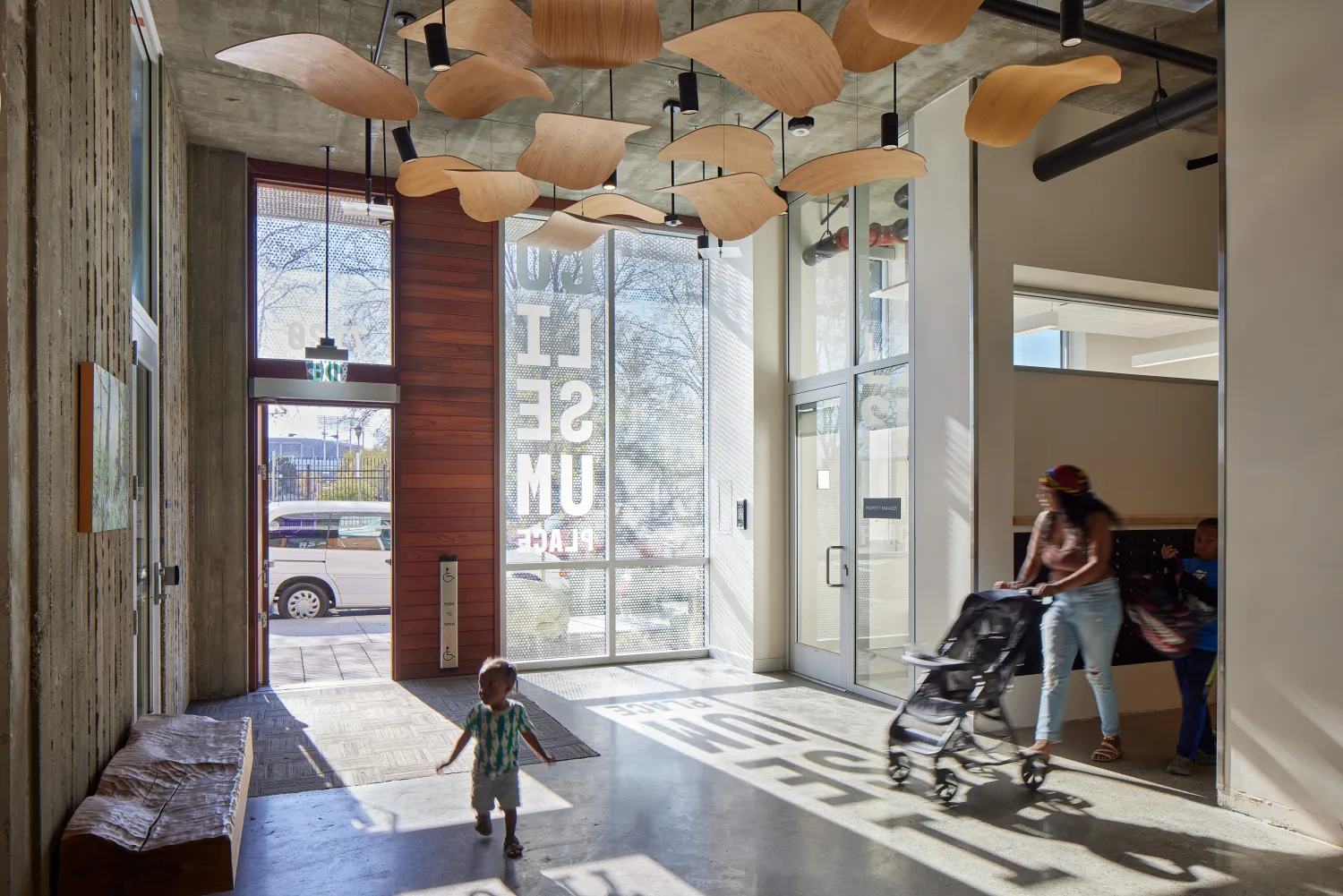
Several notable project features were developed or refined through the inclusive design process. Some came with a nominal added cost, but most did not. And thanks to the inclusive design process, the team was confident that each of these elements would deliver real value to potential future residents.
- Accessible Drop-Off Zone: A clearly marked mid-block crossing and van-accessible loading space adjacent to the entrance provide a dignified and intuitive arrival experience, which is particularly important for residents with mobility challenges and those who rely on paratransit. This feature also provides safe and welcoming alternative transit support for all residents.
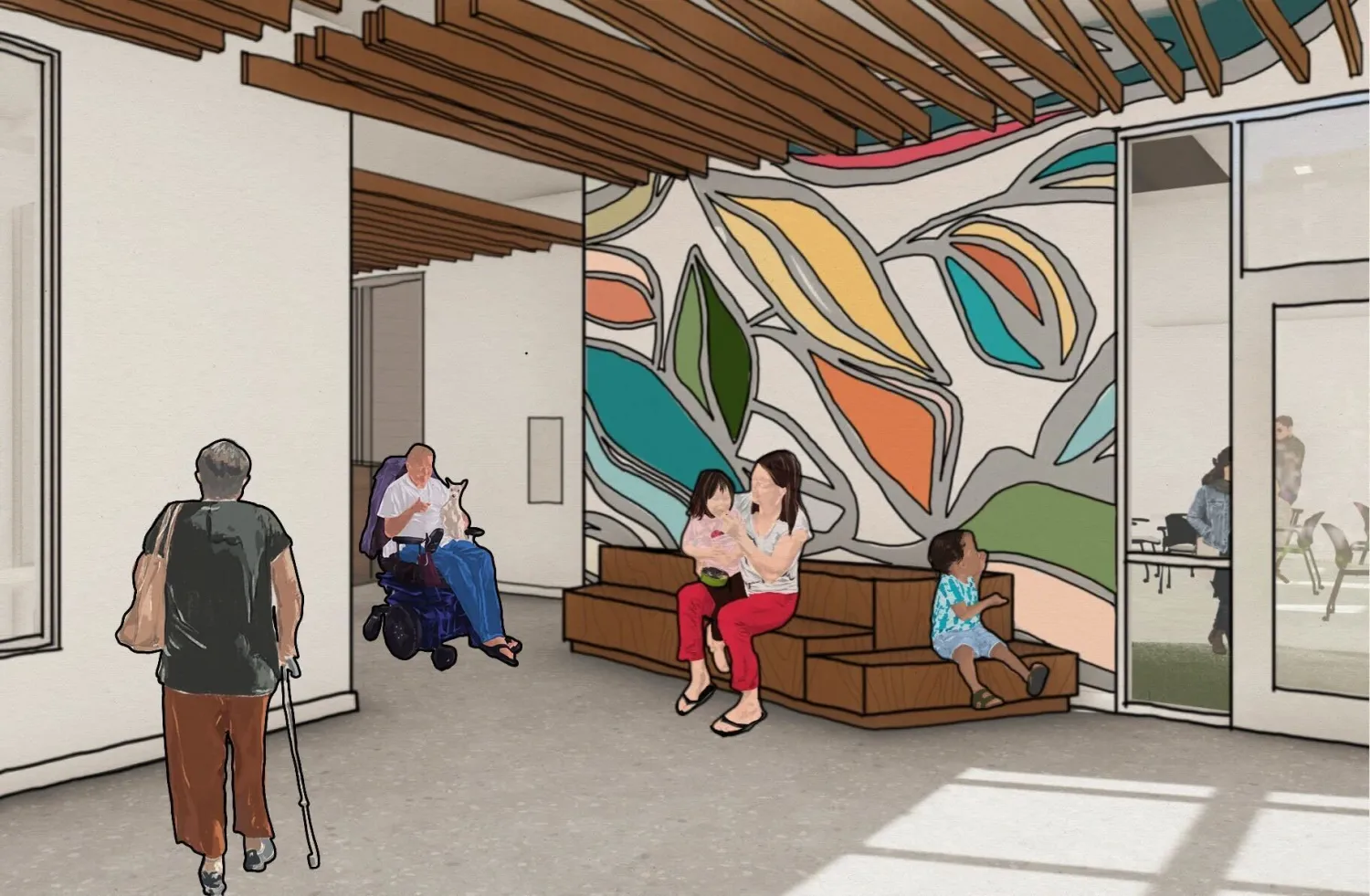
- Lobby as a Third Space: Not just a space to pass through, the lobby functions as a safe and comfortable waiting space for residents using the loading zone, offering visibility to approaching vehicles from inside. But beyond that, it serves as a valuable “third space”—a semi-public zone that supports social interaction, chance encounters, and community connection. Features like a custom multi-height bench built by DBA_Workshop make this space accessible, inviting , and adaptable for people of all ages and abilities.
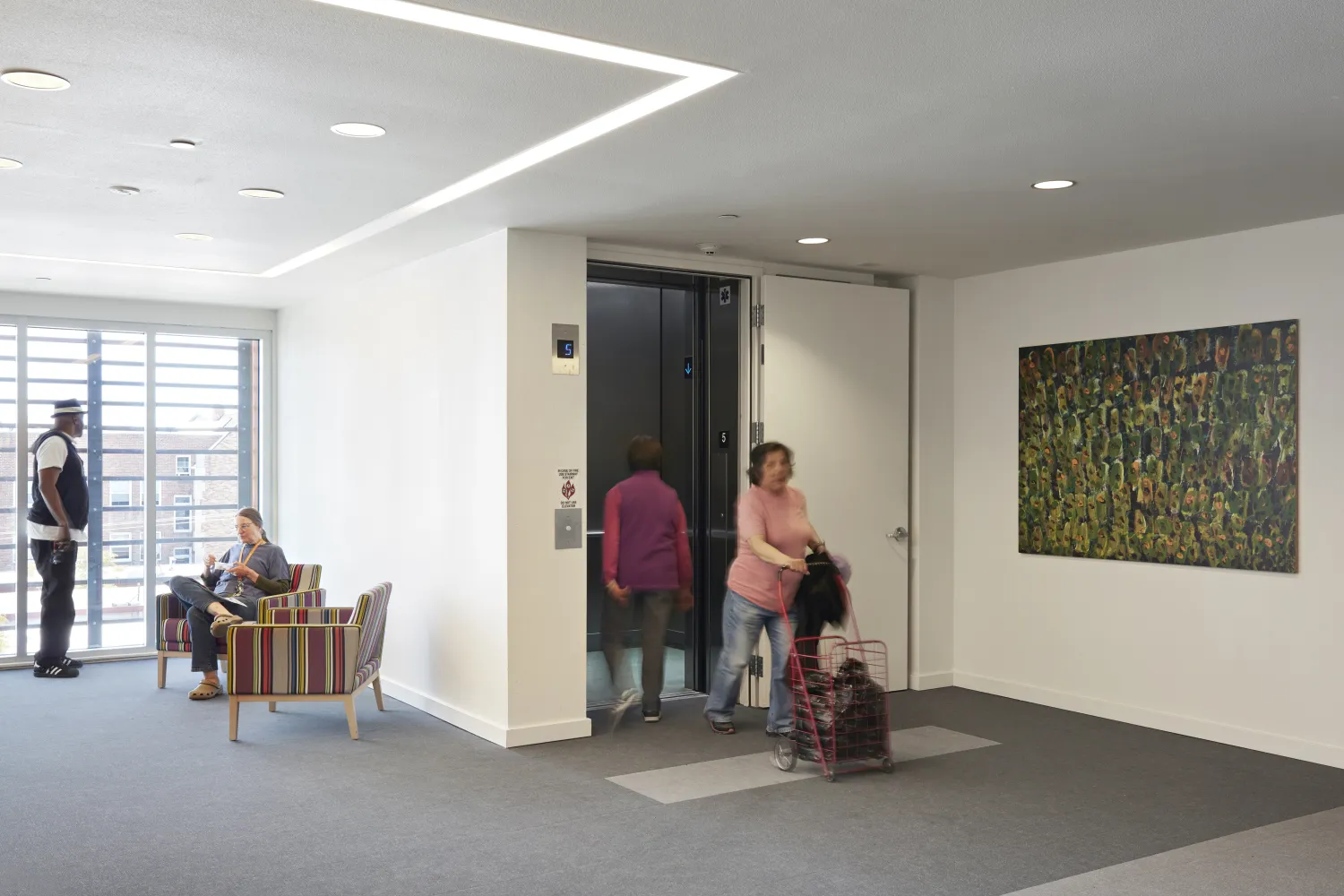
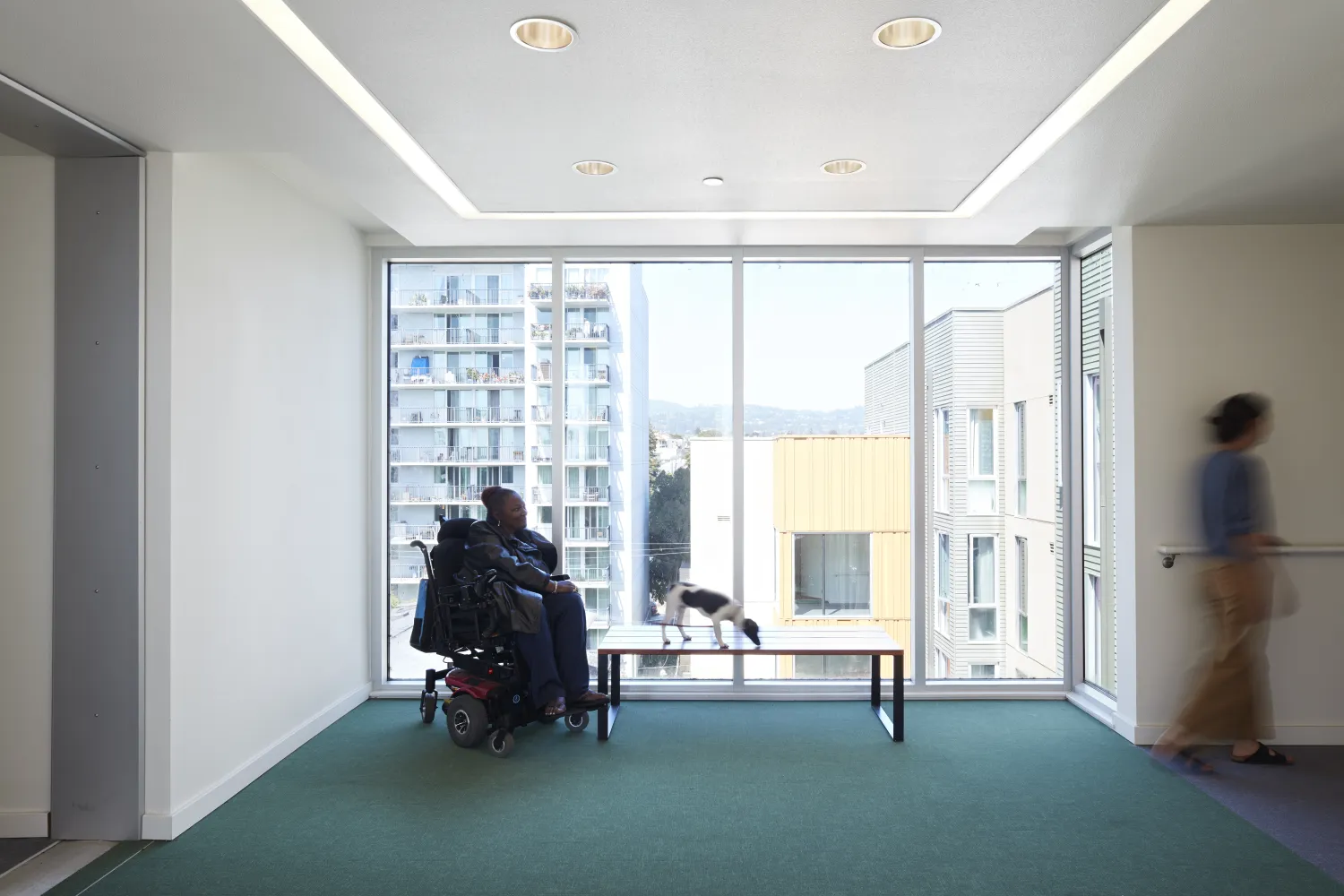
- Circulation with Purpose: Wide corridors with natural light, seating alcoves, and varied color schemes improve wayfinding, foster a sense of identity, and create opportunities for informal interaction.
- Healthy Materials and Indoor Environments: Finishes throughout the building were selected for durability, ease of cleaning, and indoor air quality. We prioritized zero-VOC paints and avoided materials with known toxicity risks, benefiting all residents but especially those with health vulnerabilities such as young children, pregnant residents, and people with respiratory sensitivities.
- Unit Features: Informed by resident feedback, all units include under-cabinet kitchen lighting for visibility and safety, and dual-height door viewers to allow all residents—seated, standing, or of any stature—to see who is at the door.
- Navigable Layouts: Bathrooms and kitchens are designed with generous clearances and flexible layouts, supporting accessibility without the need for major modifications later. All ground floor units have roll-in showers installed to support residents with mobility limitations.These universal design principles benefit everyone, regardless of age or ability.
Some features, like corridor grab bars, did not make it through the value engineering process. But those tradeoffs were made transparently, with clear discussion of priorities. Inclusive design helped us focus not just on what we had to cut, but on what we chose to keep, and why.

Control, Choice, and Independence
Inclusive housing is vital infrastructure that supports people with disabilities to live independently, in community, which is something that everyone deserves. One of the best explanations I’ve heard of the value of inclusive design comes from Timothy, a formerly homeless resident living in a DBA-designed supportive housing community in San Francisco. In a short video, he reflects on what it means to live in a space designed for his needs:
“To be able to take a shower by myself, cook my own food, and come in and out of a place I have control over… it’s wonderful,” he said. “I’m almost 58 years old, and this is the first place I’ve ever lived in that’s mine.”
His words underscore the real goal of this work: to create places that support agency, dignity, and belonging. Watch Timothy’s story here.

Looking Ahead
8 Partridge demonstrates that inclusive design can guide a project not just toward better outcomes, but toward more informed, values-based decision-making. It helps ensure that what gets built reflects the real needs of the people who will live there.
This is not design in spite of constraints. It is design shaped by care, partnership, and the belief that everyone deserves a home that works for them.
__________________________________________________________________________
Anne Riggs, AIA, CASp, is an Associate with David Baker Architects and the firm’s Inclusive Design Lead; she works in the DBA_LA studio in Los Angeles’s Chinatown.