Two Bay Area architects draw inspiration from their own apartments for David Baker Architects’ (winning) entry into a national competition to unpack how single-stair regulations (the housing world’s latest idea) could unlock more housing in cities of all scales.
We keep our apartment windows open every day. San Francisco is blessed with temperate weather, and our homes, though compact, benefit from cross ventilation and natural light throughout – a product of their narrow footprint, mid-rise typology.
Most of the buildings in our own neighborhoods are like this — built under a pre-war paradigm that brought significant housing to vast swaths of the city. Largely unchanged, these buildings and neighborhoods demonstrate tried and true principles of urban housing. Principles that have been eroded and cast aside over time.
Though it used to be commonplace to build mid-rise, medium-sized apartment buildings throughout San Francisco, production of this type of housing has declined. SF Planning’s 2024 Housing Inventory Report notes that of the 1,735 homes that were added in 2024, only 163 were in medium-sized (5 to 19 unit) buildings.
As policy makers have been looking into increasing smaller scale development, regulatory hurdles have come into focus. Our apartment buildings are efficient, livable, delightful homes, but neither could be built under current codes.
One building code provision in particular has been getting a lot of attention recently - the second means of egress. Typical modern apartment buildings have two exit stairs, connected by a hallway. However, this configuration results in significant square footage dedicated to circulation, and these types of buildings are particularly difficult to fit on small lots. Much ink has been spilled recently about single stair reform. Jurisdictions across the country have been studying what single stair reform might look like in their communities as the barriers mentioned above are factors in many communities. With modern sprinkler protection, limited occupant load per floor, and a two‑hour–rated primary stair enclosure, there is widespread recognition that a second means of egress is not needed.
The building code is one factor, but the zoning code has corralled new apartment buildings in San Francisco as well. Many high resource neighborhoods in San Francisco were downzoned in 1978. Subsequently, new construction has generally been concentrated in the eastern and southern portions of the city in recent decades. The San Francisco Planning Department highlighted the social costs of exclusionary zoning in their Racial and Social Equity Analysis, noting, “Only 9% of new housing was built” in high resource neighborhoods, “over the last 25 years, despite comprising more than 50% of the city’s land area and 60% of developable parcels.” San Francisco’s recently passed Family Zoning Plan aims to redress this imbalance.
In this blog we draw inspiration from the historic buildings and neighborhoods we live in, and propose a model for adding housing to them.
Single Stair Competition
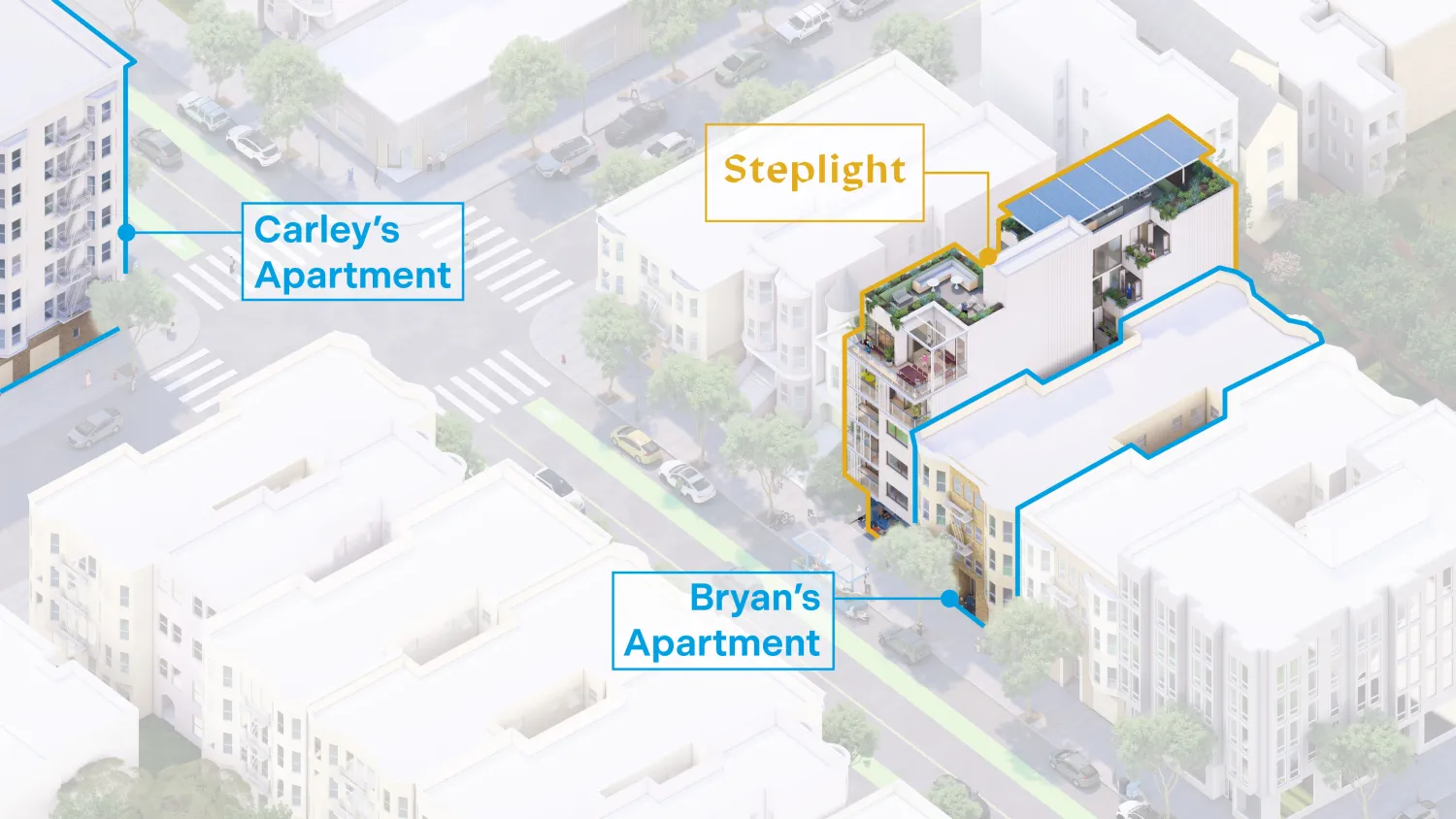
Last summer, we submitted a design to the 2025 National Single Stair Competition. The competition sought innovative single stair designs that fit on typical parcel sizes throughout the US. We chose the San Francisco site -- 25 by 110 feet. The design competition rules established a maximum building height of 75 feet and a minimum density of 150 dwellings per acre. No further site context was provided beyond the lot dimensions, so we drew a fictionalized neighborhood around the competition lot, with a mix of typical building types found in the city (including the buildings we live in), some historic character, good bike and transit infrastructure, and nearby amenities.

Our Apartments
While working on the competition we often found inspiration in our current pre-war apartments. Since we sited our competition entry in a fictionalized version of our neighborhoods, this tendency was reinforced as we crafted our design to fit in and mimic aspects of the typical historic urban fabric - light wells, rear yard dimensions, etc.
Bryan’s Apartment
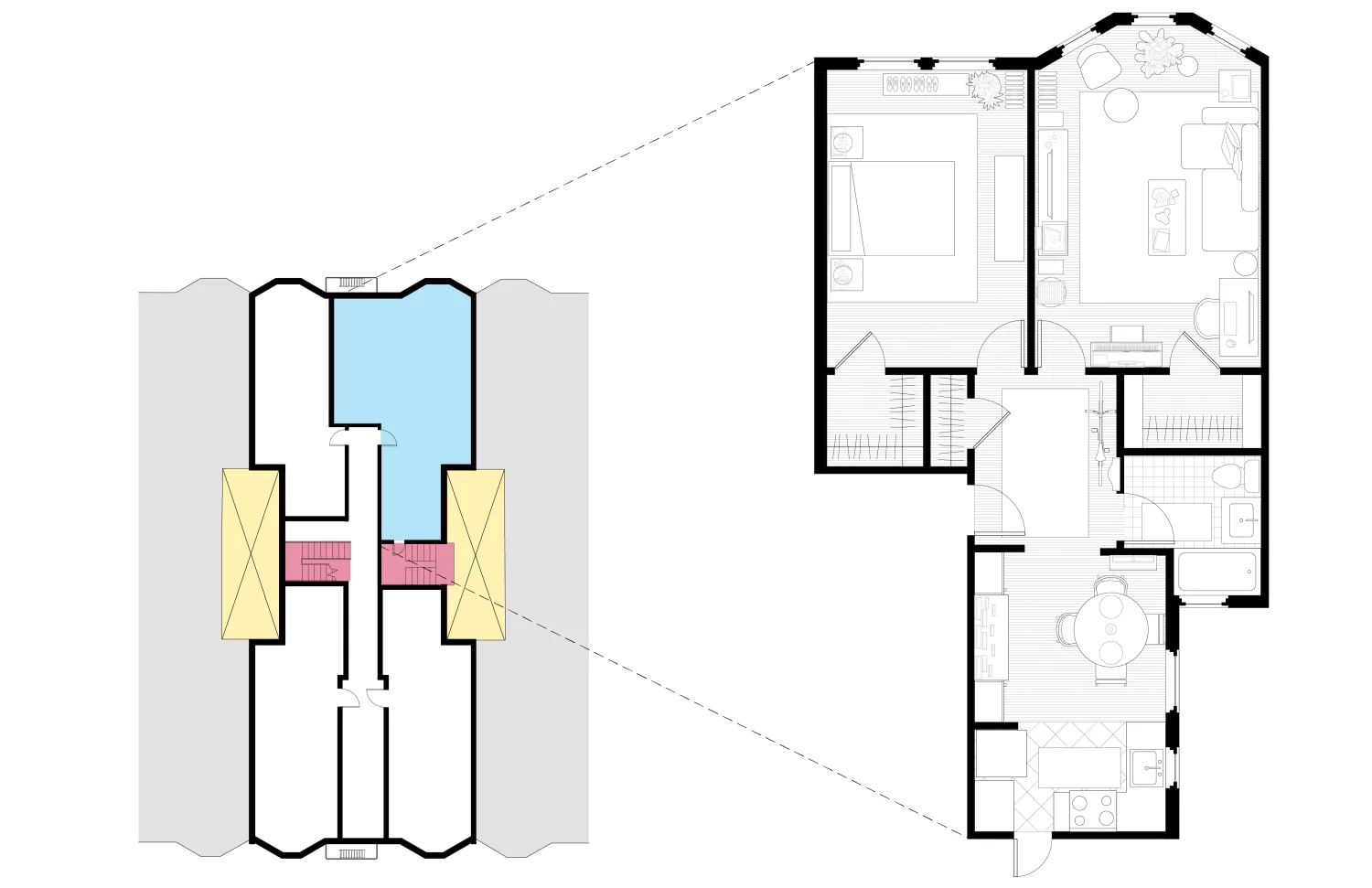

My apartment building is an interesting comparison because it is four apartments per floor - the limit dictated in the competition. The building type is also prevalent across the city, and at 37.5’ wide, was often delivered with a neighboring twin as three 25’ wide lots (75’) became two 37.5’ wide lots (75’). As such, lightwells between the two buildings are often coordinated, maximizing light and livability of units across property lines. Windows onto the lightwell offer features that are rare in modern double-loaded corridor apartment buildings - a window over the sink, a window in the bathroom above the shower. The lightwell creates a significant 2nd exposure for our home, pulling light and air into what would otherwise be dark closed-off space.
From a life safety perspective, the building is an interesting mix of no sprinklers and hodgepodge egress - one stair that is open to the corridor and connects all four floors with windows (typically open) five feet from the property line; a second, adjacent exterior stair five feet from the neighboring property line and just a few feet of exit separation from the primary stair; fire escapes; and a narrow passage connecting the rear yard to the street. The ground floor is comprised of garage, utility space, and a hallway stair going up to the first residential level upon entry. None of the units are accessible.
While some effort has been made to provide egress options in my building, and I do feel safe in it; the egress system would not be permitted today in its current state and there are drawbacks to this housing stock from unit variety and accessibility perspectives.
Carley’s Apartment
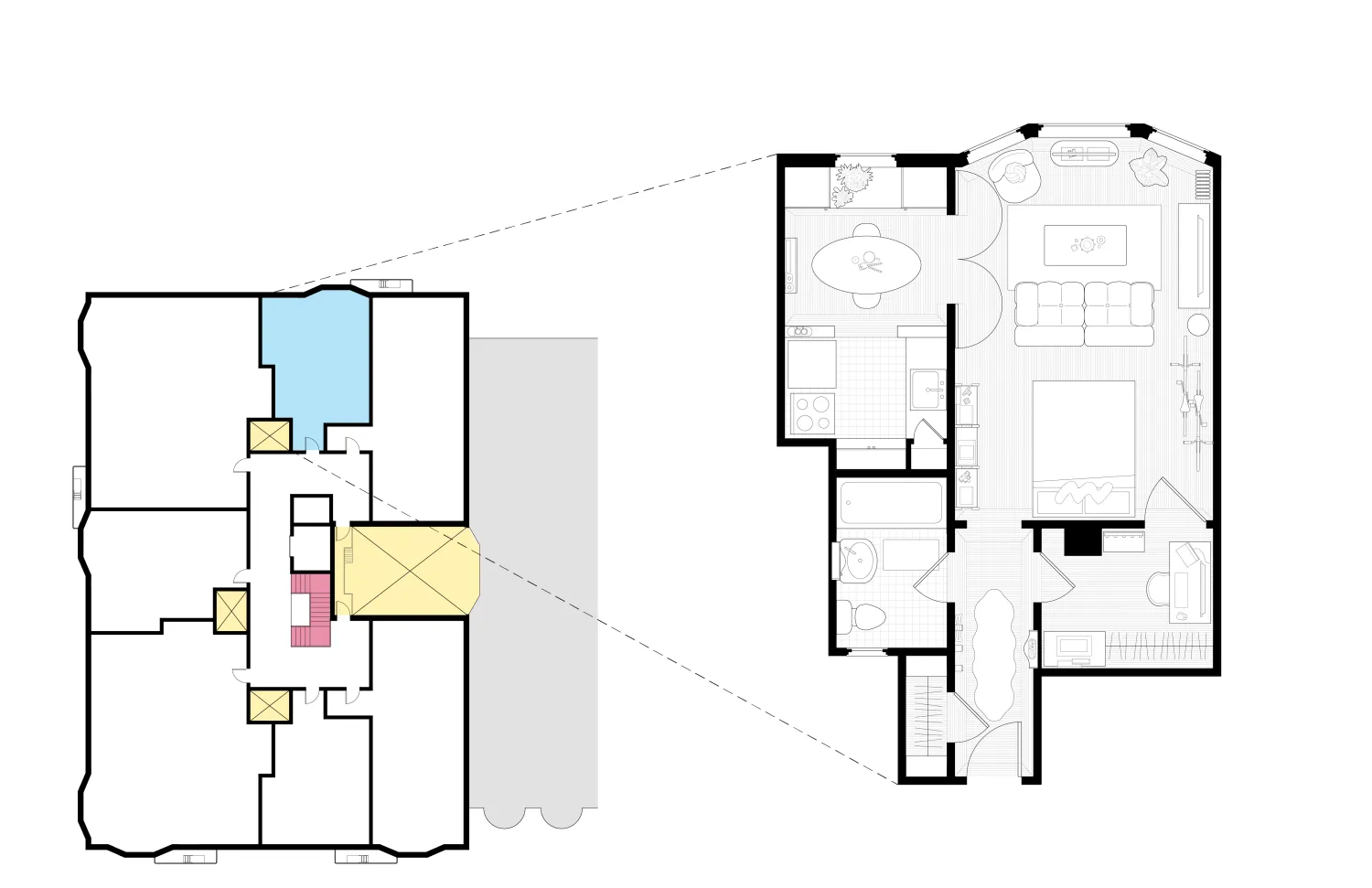

My apartment building is a larger typology often seen anchoring the corners of a San Francisco block. This building type utilizes three 25-foot wide lots (75 feet) to achieve seven apartments per typical floor, and at five stories, exceeds the current 40-foot zoning height limit. A large lightwell is coordinated with the smaller, three-unit building next door, and provides a generous second exposure to two apartments. Three small lightwells are punched through the building to provide more light and air in the rest of the units — like mine — that aren’t facing onto the main lightwell. While this lightwell doesn’t provide any significant natural light due to its size, it is effective for cross-ventilation in my home.
In terms of circulation and life safety, my building has an old, San Francisco-style elevator with an accordion door, one open stair that connects all residential floors and has windows at each level (also typically open), fire escapes, and is sprinklered. Although the building has an elevator, the ground floor and lobby sit a few feet above street level and are accessed via an exterior entry stair, so none of the units are accessible.
Large operable windows, cross ventilation, and the charming, practical built-ins are some elements I enjoy in my apartment that were kept in mind during the design of Steplight. While I sometimes sneak out onto my fire escape – probably to my neighbor’s dismay – I crave private outdoor space, which became a major design element of our proposal. I appreciate the density – 28 units – that my building’s typology brings to a neighborhood consisting mostly of very large single-family homes.
Steplight
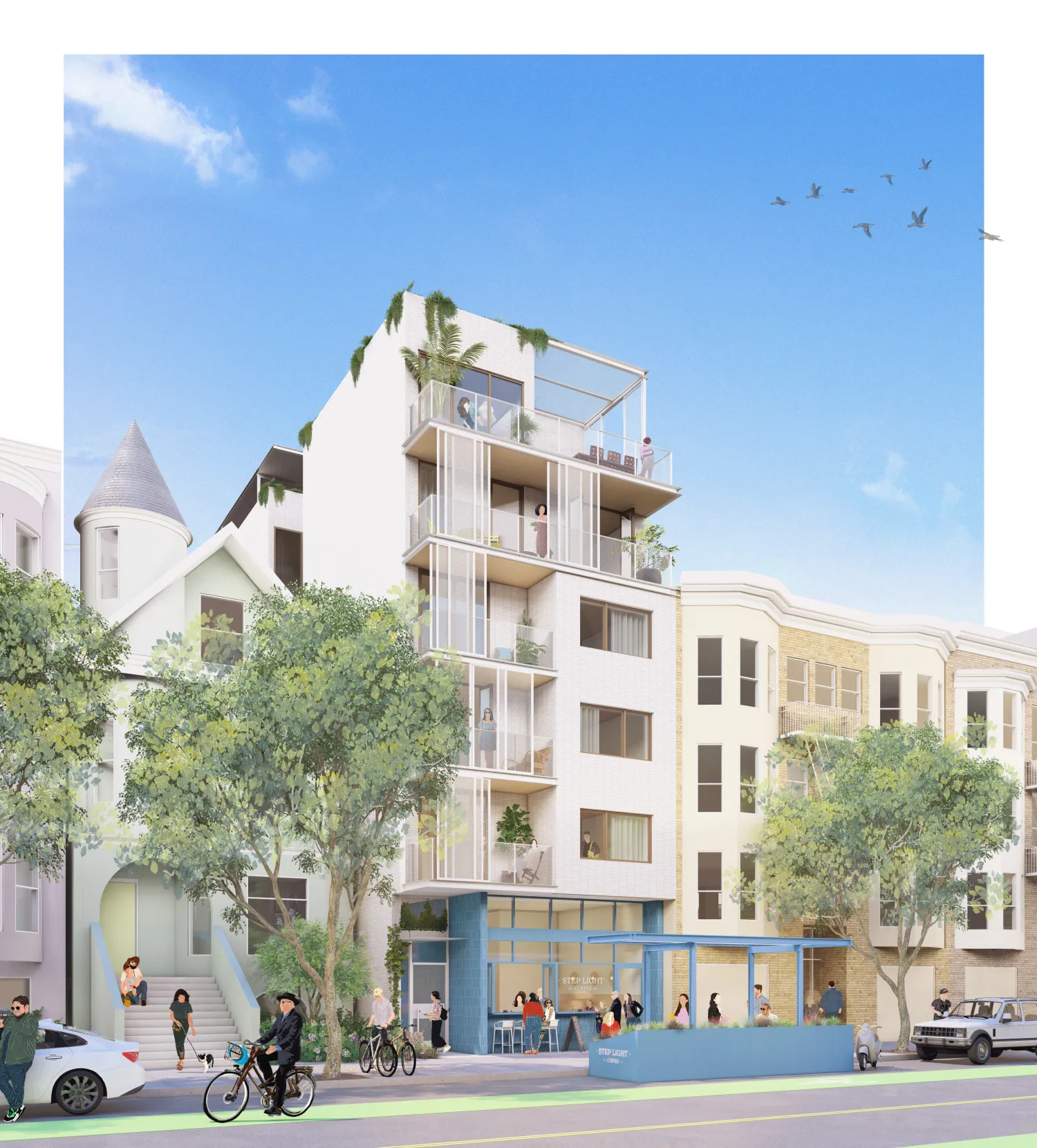

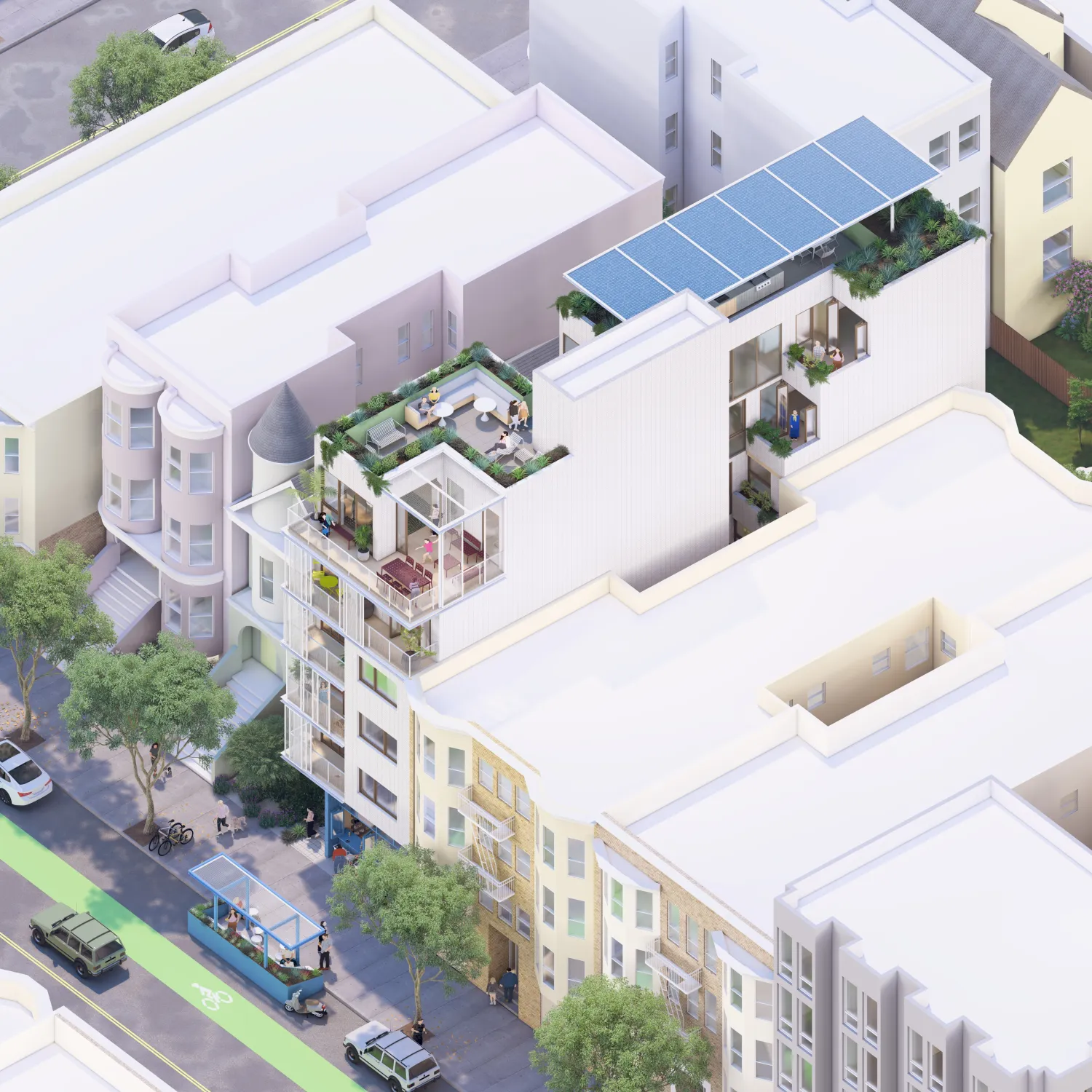
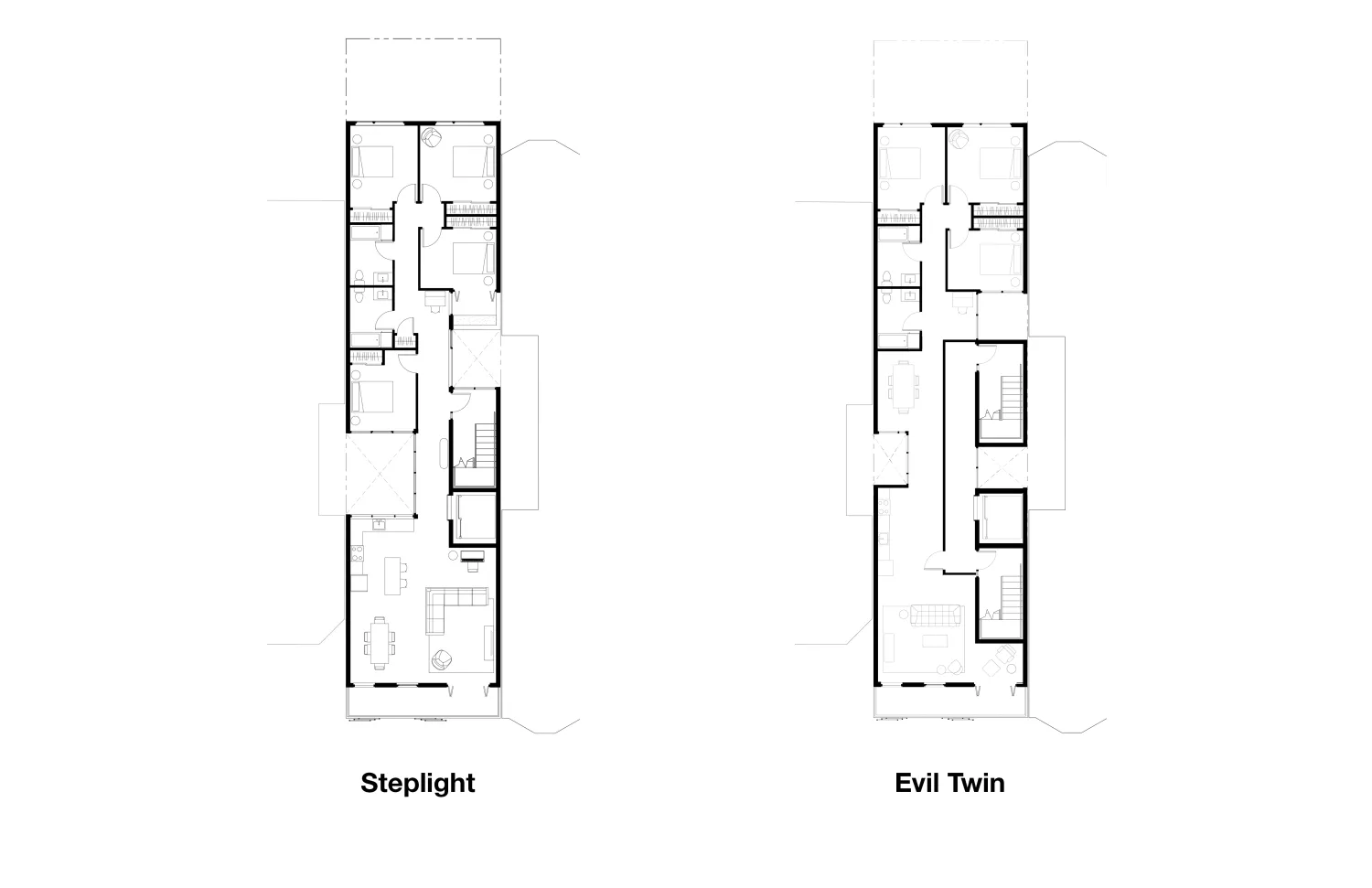
Steplight is David Baker Architects’ winning entry to the National Single Stair Competition. This scheme riffs on the city’s classic property-line lightwells with tiered massing, cascading open space, and lightwells that support diversity, community, outdoor connection, and bright spaciousness. Steplight unlocks the constraints of a long, narrow site and models a contextual means to add modern homes tuned to San Francisco’s lower-density northern and western neighborhoods.
With variation at each floor plate, this expression offers a unique mix of units—from studio to four-bedroom—filled with light and air and connected to nature and urban life. The plan activates the street edge and retains the customary backyard placement, contributing to the collective open space of the block and respecting the neighborhood fabric.
Through its refined response to single-stair reform, Steplight realizes the potential of San Francisco’s recent upzoning throughout its western and northern neighborhoods (the Family Zoning Plan) with diverse, contextual housing that incrementally yet substantially inserts density and housing choice into these areas.
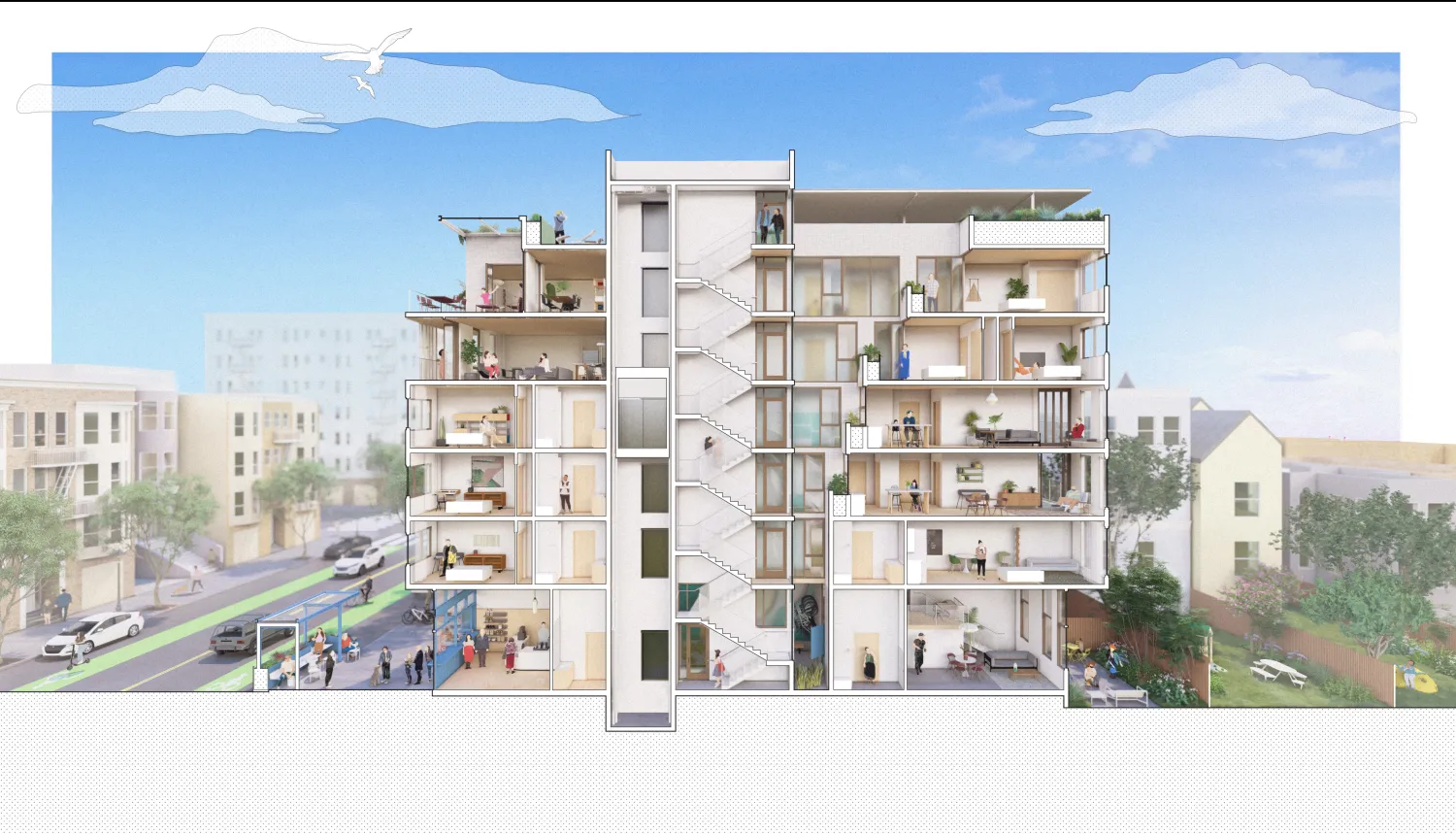

Steplight provides usable open space in line with the existing city scale and pattern. Paired with balconies and a social roof deck for expanded outdoor living, the placement of the shared rear yard contributes to the aggregation of open space created by typical surrounding lots, preserving neighborhood access to light and air.
San Francisco is keen to encourage development at this scale, and it could occur when a vacant single story commercial property is redeveloped. Or, it could be an owner-occupied lot, providing homes for extended family, friends, and/or others. This type of development could be undertaken by a community land trust, a state or municipal social housing authority, or by a group of friends that want to live close to each other.
Evil Twin
Our neighborhoods, it must be said, contain unmet zoned capacity, and buildings that would be too tall under our current zoning (these were grandfathered-in after downzoning was adopted in 1978). It’s worth pausing to examine reasons for prevalent unmet zoned capacity, and some headwinds projects will face even though the Family Zoning Plan was approved in early December.
Many of the lots in the upzoned areas have a building on them. Vast empty lots, while more common than one might think, are not a significant feature of these neighborhoods. Undoubtedly, many building owners will choose not to redevelop their lots regardless of whether the lot is upzoned or not. This is not necessarily a bad thing. Varied building ages and building heights are often desirable features in cities. But it bears mentioning – architects will need to be sensitive when designing in this context.
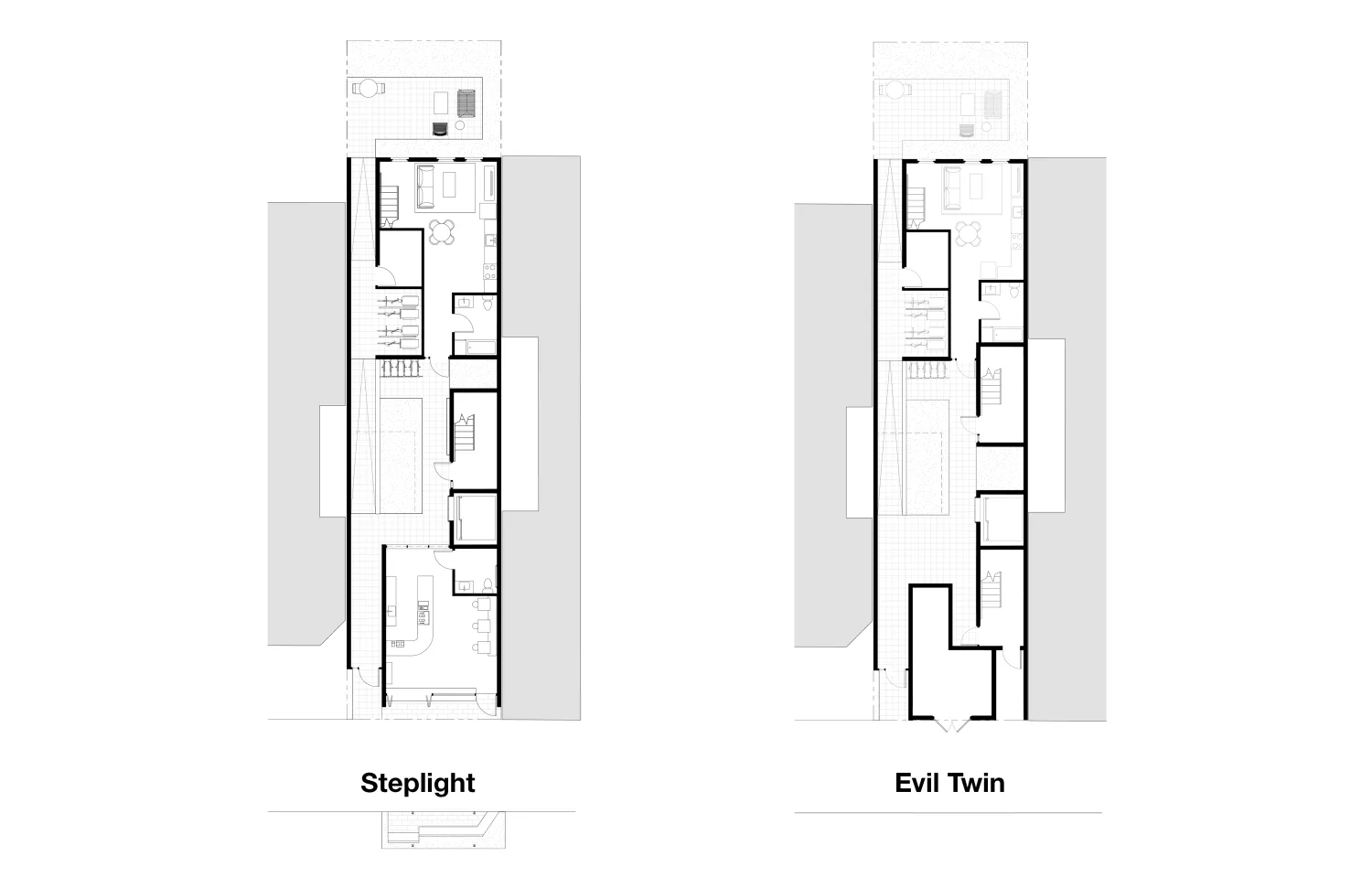
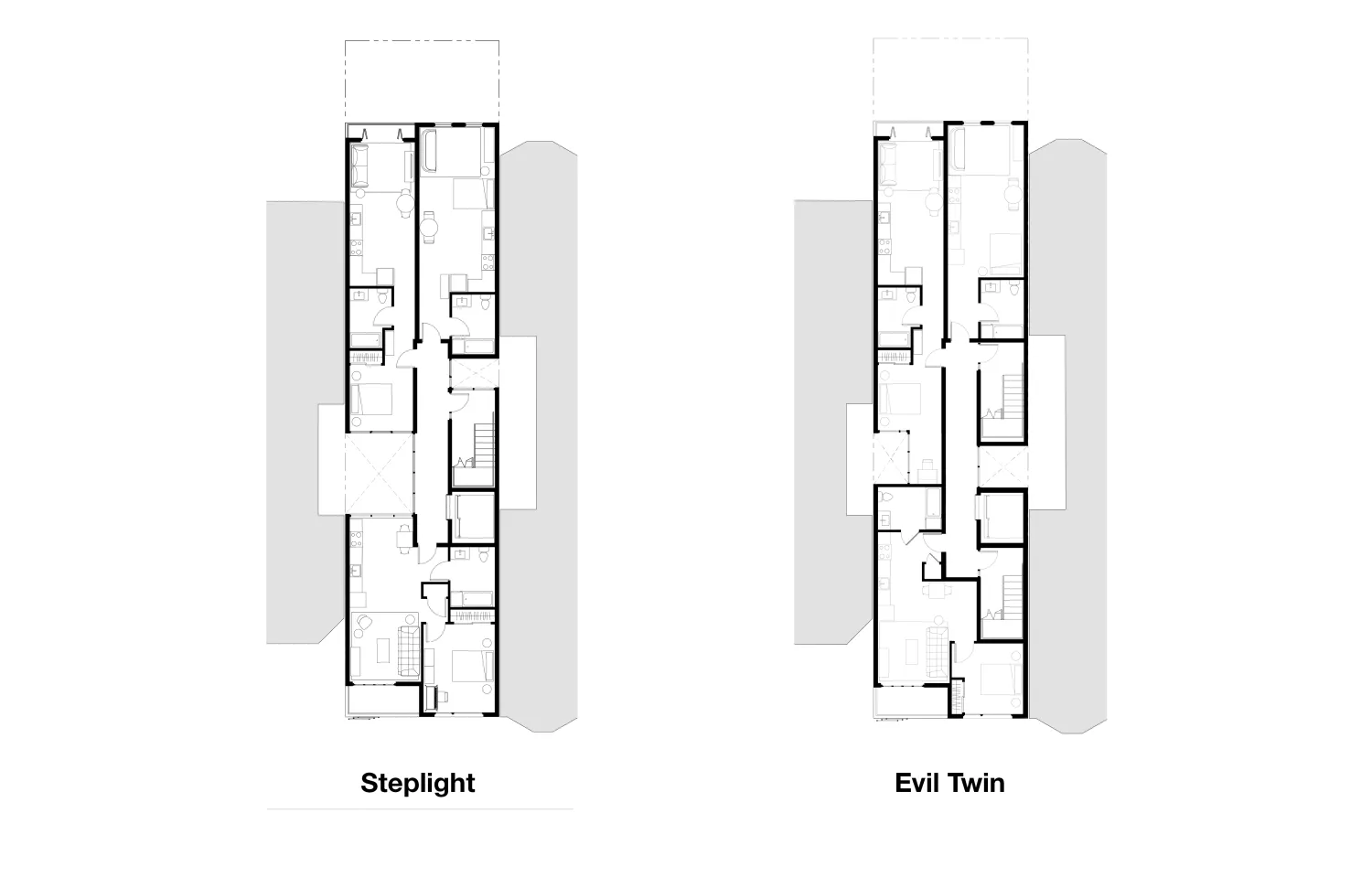
With the two-stair requirement in place, an owner hoping to add housing on their lot will be forced into compromising the livability of the units, dedicating precious square footage to circulation, and will have difficulty making the proposed building sensitive to neighboring lot line conditions. San Francisco’s high construction costs and a low efficiency ratio (how much of the square footage is usable space vs stairs, corridor, and elevator) will further complicate getting these projects to work with two stairs. Indeed the likeliest scenario is this “evil twin” building would not be built. Alternatively — and the feasibility of this is not certain — our 25-by-110-foot lot would be combined with neighboring lots through a process called land assembly, until a lot large enough to support a double-loaded corridor building is consolidated. As with the smaller building, the double-loaded corridor building will face challenges being sensitive to the context and producing livable, multi-bedroom units.



Conclusion
Housing is the fundamental building block of cities. It is jarring to be writing longingly, in 2025, about housing stock built 75 to 100 years ago. But we know from our own experience that there is so much to like in the old apartment buildings that are common in our neighborhoods. It’s easy to understand why our neighbors cherish them and are fearful of losing them to something else.
Single stair reform is an opportunity to leverage modern building technology while reinvesting in the tried and true qualities of old, midrise, dense apartment living. With luck, future generations will be able to keep their windows open, enjoying the sunlight and breeze through their home built in the late 2020s. They might not give a second thought to the notion that their sixth-floor, three-bedroom home is served by a single stair.
What you can do now
You can learn more about efforts to legalize single-stair buildings through the Center for Building in North America, which maintains a map of local initiatives. The Center is one of the sponsors of the competition. Additionally, let elected officials know you are interested in single stair reform! A number of design professionals have been voicing their support, but it’s very helpful for community members to be engaged on this topic.
Learn more from competition sponsors and judges at https://www.singlestair.com/.
Check out the Larch Lab’s policy brief that was a part of launching this discussion … and more from this report from the Joint Center for Housing Studies.